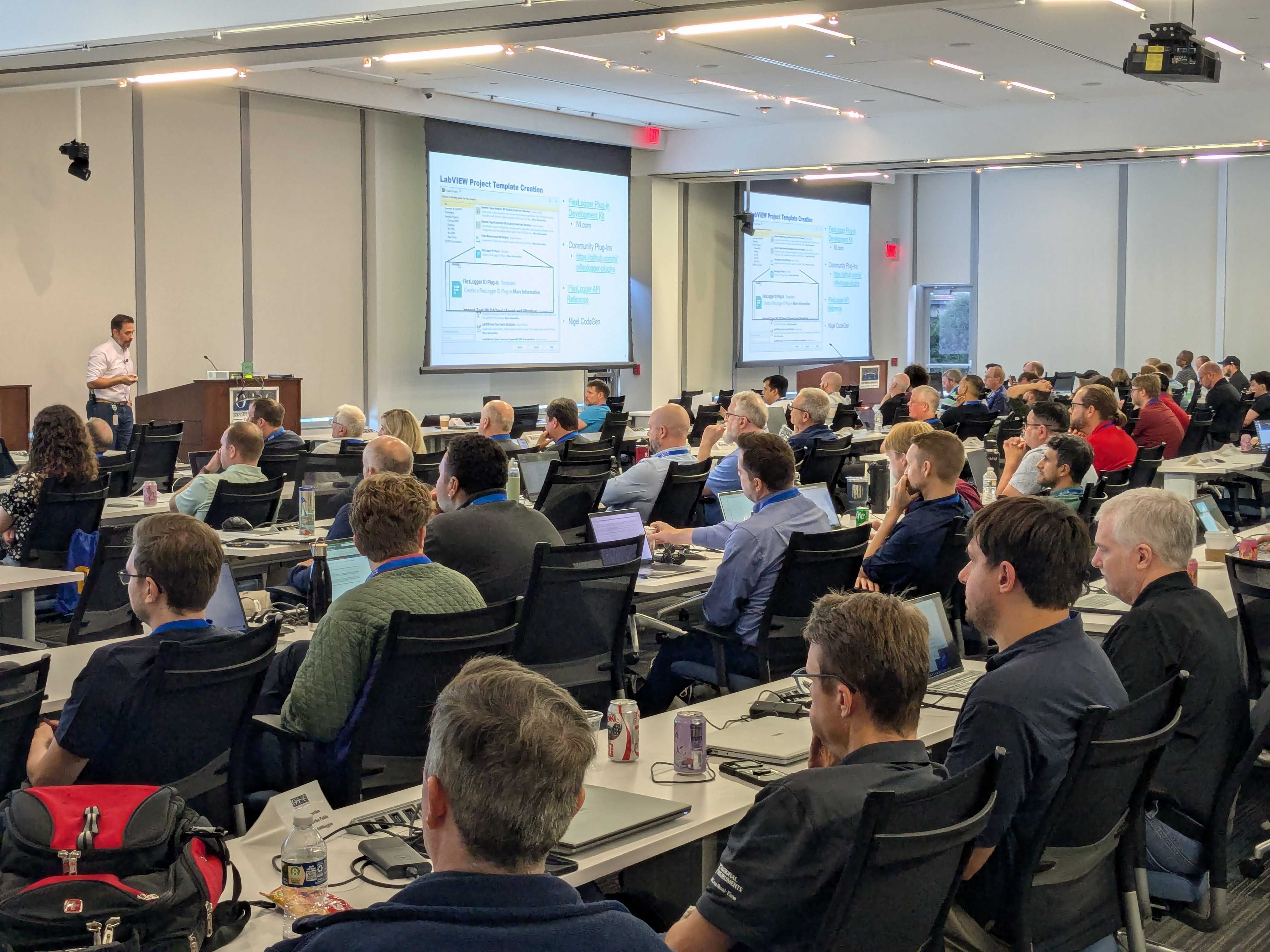
Last month, over 100 members of the LabVIEW community assembled in Chicago, IL at the OLC Education & Conference Center for GDevCon NA. There were dozens of engaging presentations covering everything from NI’s latest developments with Nigel to programming techniques, to advice on personal growth for a more satisfying career. What were some themes of this years’ GDevConNA?
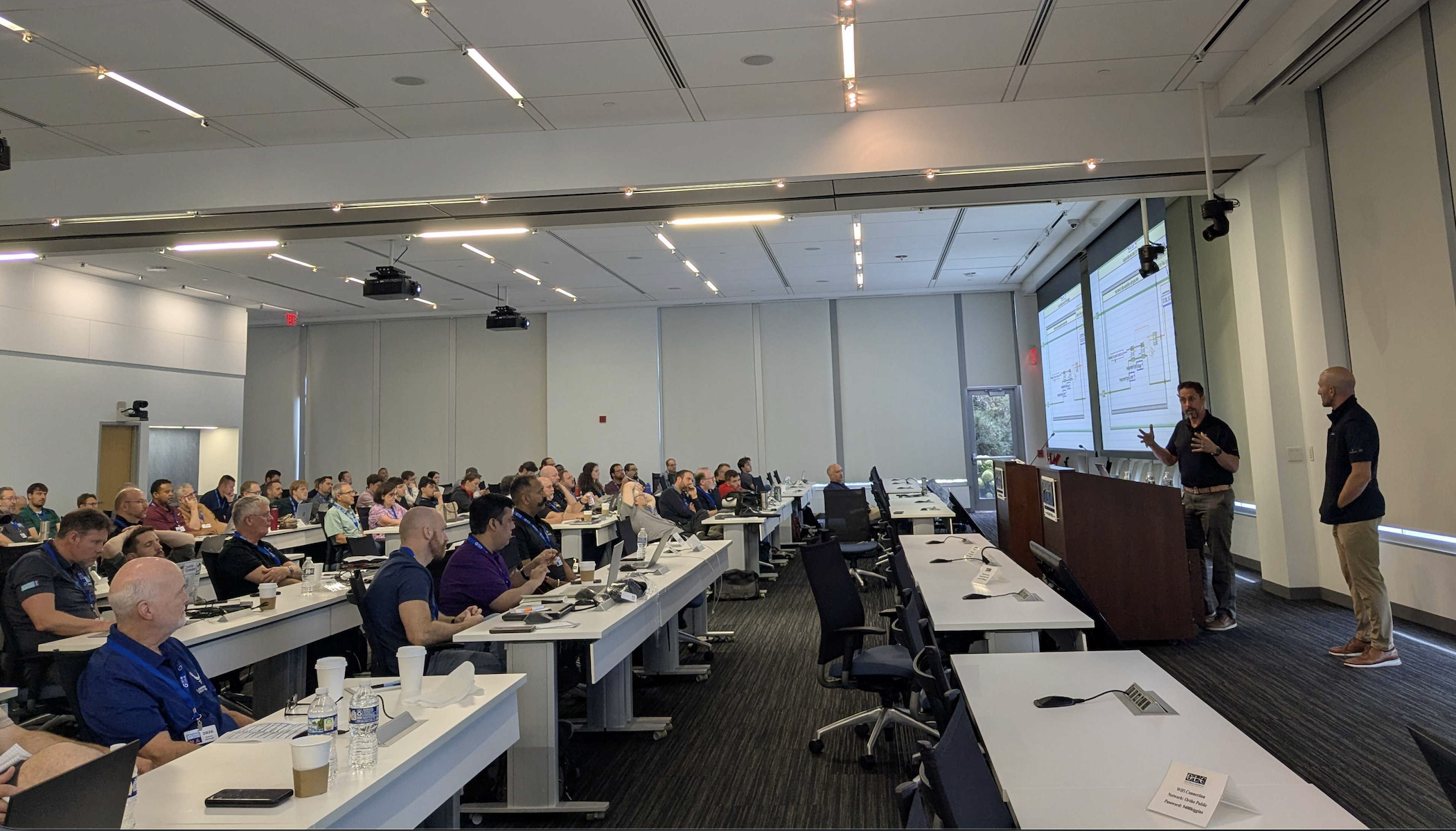
LabVIEW is strong and growing
GDevCon NA was well attended and saw more than 40 MORE attendees than last year, with new venues debuting this year such as GDevCon LAT coming soon. An inspiring retrospective presentation by Tony Vento looked at 40 years of LabVIEW innovation and pointed out that the TIOBE index - a measure of software language use - shows an increase in LabVIEW’s popularity in recent years. Moreover, LabVIEW 2025 saw the fastest adoption ever of a new LabVIEW release. NI’s AI assistant Nigel, demonstrated code generation from prompts, and integration of Nigel into NI’s suite of products such as FlexLogger and Instrument Studio. Users empowered to ask to Nigel set up customized experiments and logging right in the IDE.
Security
AI is changing the landscape of software development - the time from vulnerability discovery to exploit is shrinking rapidly, so security needs to be a top priority from day 1 in software design. The EU’s Cyber Resilience Act (CRA) sets mandatory cybersecurity standards for hardware and software products, with requirements deadlines coming this fall and into 2027. JKI’s Sarah Zalusky presented the JKI Security Suite and the concept of Shift-Left, which points out that software security can be achieved more effectively and economically if security concepts are applied in the design phase, rather than later in the deployment and maintenance phase of an application's lifespan. The JKI security suite offers a tool to automatically perform static analysis on your codebase and provide a dashboard to view, correct, and monitor your application’s potential weaknesses. Your code is analyzed using an extensible set of rules that check against common weakness enumerations (CWEs). The JKI Security Suite can also can traverse your application’s dependencies and automatically generate a Software Bill of Materials (SBOM).
Connect Your LabVIEW Application to a Network
Increasingly, a LabVIEW application's value doesn't stop at the front panel. The data it collects needs to reach people and systems well outside the test cell. Tom McQuillan presented Nominal's platform that streams live data (including telemetry from the ISS) to a web dashboard and lets teams replay old datasets as though they were streaming in real time. Nancy Henson, Craig Bedward, and Tony Kuiper presented an open-source, drop-in REST framework that turns a LabVIEW system into its own server, so clients without LabVIEW installed can pull data from an embedded controller deployed in the field. Which protocol you reach for depends on the job. REST is well suited to complex data exchanges, while higher-rate streaming might be achieved with WebSockets, MQTT, NATS, and more. Whatever the implementation, successful LabVIEW applications today are the ones designed for data to be shared, not siloed.




How to approach Abstraction
Abstraction is a way to consolidate common behaviors and patterns from different implementations of your software into a single place, allowing common code to be reused. At its best, this saves time and facilitates supporting the software as it matures. But Steve Kifer reminded us “One person’s Abstraction is another’s Obstruction”. Often, it is the same person at different points on the same project. Michael Klessons and Quinten “Q” Alldredge presented on this theme as well: Abstracting common behavior can sometimes result in additional work, and reusable code that is never reused. This happens in part because users' needs and business objectives evolve during a project. An antidote is to watch for patterns to emerge during development and abstract these as they arise, rather than anticipating behaviors that “should” be abstracted.
There’s No Substitute for Showing Up!
For the success of your project and maintaining great client relationships, showing up in person is indispensable. If you missed out on GDevCon NA, you can still catch the presentations online, but there is no substitute for showing up next time! The venue and after hours activities were a great opportunity to network and revitalize your enthusiasm for LabVIEW. Great conversations were held about AI, the future of LabVIEW, and maintaining client relationships. Some of the attendees learned about which developers are skilled at karaoke, and what happens when Long Island Iced Teas and LabVIEW developers mix. The GDevCon NA board organized a raffle with wonderful prizes, where your humble correspondent won a 3D printer, and a GDevCon NA beanie. Come to the next one for a chance to get yours!
There are of course more great presentations than could be mentioned here, so thanks to all attendees and presenters. We especially thank Taylor Oxley and all the conference organizers, and the sponsors of GDevCon NA 2026.
Enjoyed the article? Leave us a comment