STAR-GOAT logo
STAR-GOAT
Strategic Tester for Aerospace Research · Ground Operation Acceptance Testing

Your test article costs more than the software.
Stop carrying risk in the software.

STAR-GOAT is a complete test stand platform: high-speed data acquisition, deterministic real-time control, and operator visualization in one configurable system. It replaces months of scratch-built LabVIEW DAQ and control code, so your engineers work on the article under test, not the software under it. Your data, the program's real product, is never the weak link.

PROVEN: NASA arc jet (plasma wind tunnel) · commercial hot-fire campaigns · hypersonic ground test · automotive test cells

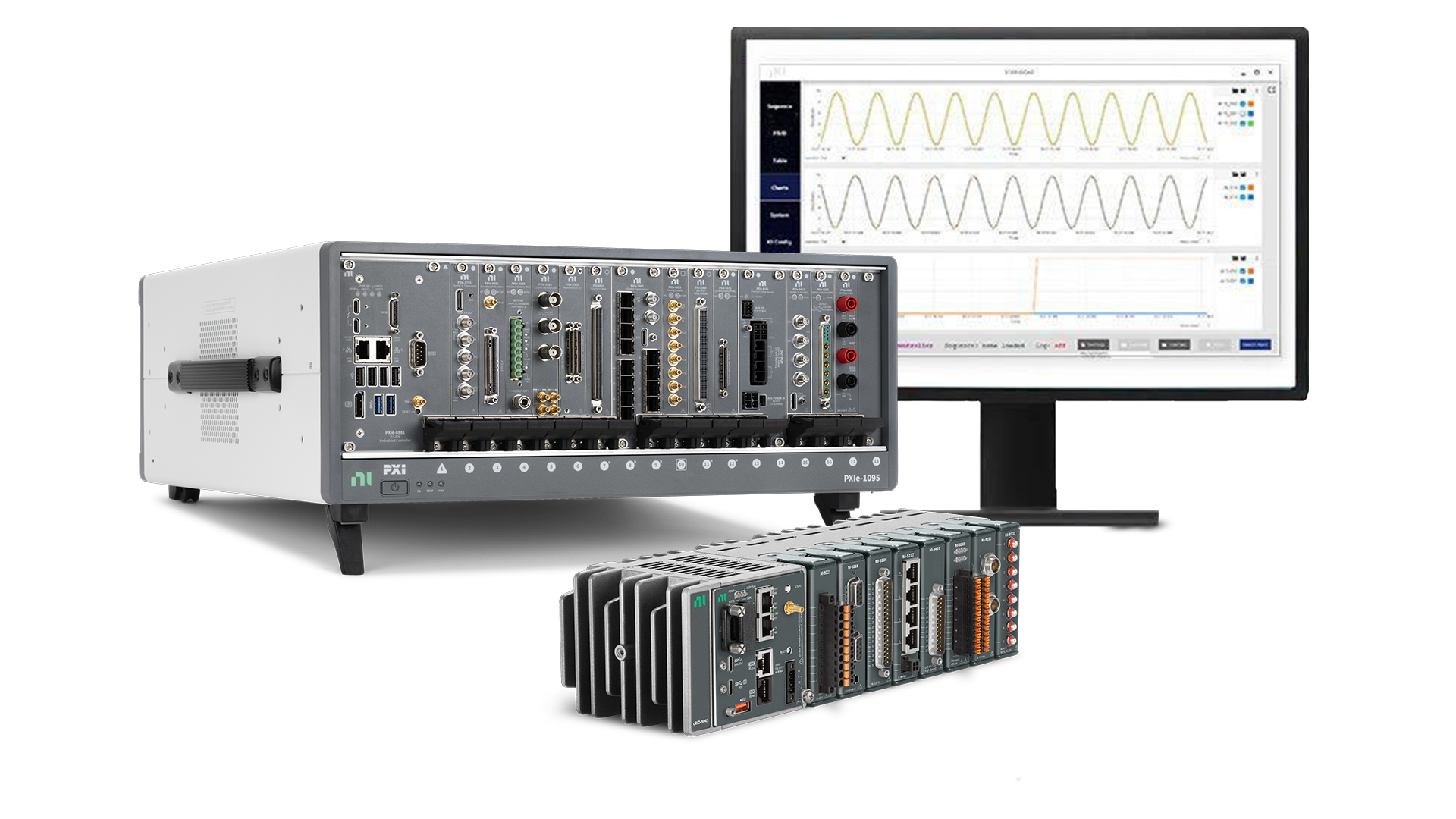
STAR-GOAT operator interface on a monitor beside the NI PXI and cRIO hardware that runs the test
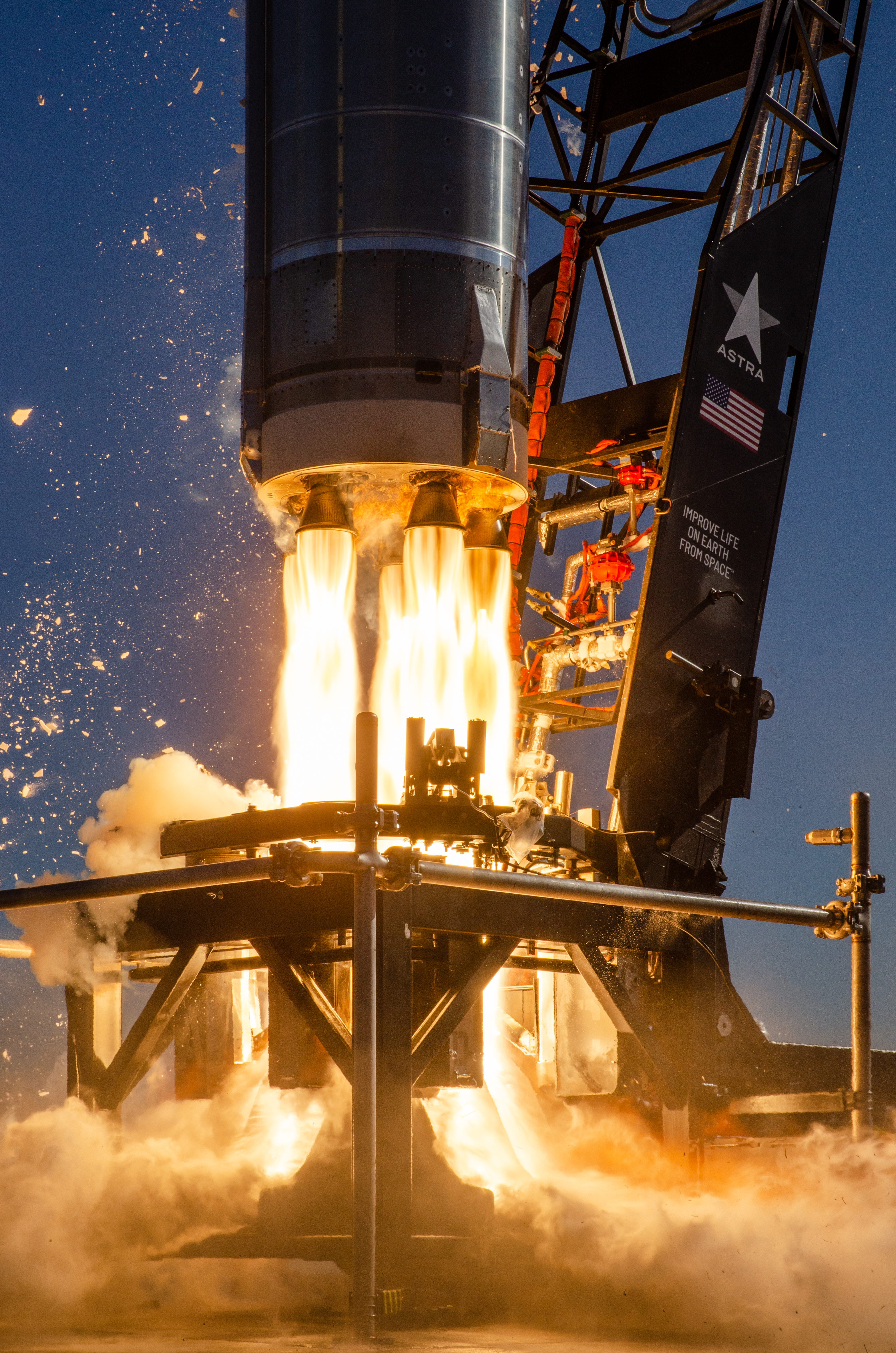
30-second hot fire Customer test stand · STAR-GOAT control
DELIVERED · CLASS C NPR 7150.2D compliance
CONTROLLER-SIDE Automatic abort conditions
DETERMINISTIC · RT Millisecond sequencing
30-DAY PATH First Run deployment

Deployed across rocket engine stands, a NASA arc jet complex, a U.S. hypersonic test range, and automotive test cells, on programs where the data is the deliverable and a lost run has a real price.

Deployed at NASA Astra
Partners NI Emerson
The build-vs-buy decision

Building test stand software from scratch is the wrong starting point.

Your engineers could build it, and that talent is why your program will succeed. The question is allocation: should they spend the next six months on the engine, or on the plumbing under it?

Scratch-built
  • 6-12 senior-engineer-months of DAQ, sequencing, logging, and abort plumbing before the first meaningful test
  • First-version code gets debugged during live tests, on hardware you cannot afford to lose
  • No NPR 7150.2 compliance artifacts; documentation from scratch routinely costs person-years
  • One author, one point of failure: the system works until that engineer leaves
  • Acquisition, control, and UI entangled in one codebase with no determinism guarantees
With STAR-GOAT
  • Installed, configured to your P&ID, crew trained, and first sequence executed in 30 days
  • Architecture already proven on NASA arc jets, commercial hot fires, and hypersonic ground test
  • NPR 7150.2 Class C compliance path delivered at NASA Ames, not just promised
  • A platform the whole team operates, with vendor support behind it and no key-person dependency
  • Operator stations, controller, and controller-side abort conditions separated by design
Do the math before you staff the build A bare-bones version built by your own team (deterministic RT sequencing, multi-protocol acquisition, distributed sync, full-rate logging, automatic abort conditions, multi-client operator stations) runs $100k-$250k of senior engineering and 3-6 months of calendar. And that buys the minimal first iteration: unproven, less reliable, with zero compliance artifacts.
Value at stake

What does a software fault actually cost?

The run, the article, or the window. Never just time.

Propulsion development

A scrapped engine and a slipped first fire

Homegrown DAQ code gets its shakedown during live tests, on hardware you can't afford to lose. Every fire spends finite engine life, so a wasted run buys nothing. Meanwhile, your LabVIEW-capable engineers are propulsion engineers first.

Proven: Astra hot-fire campaigns
Wind tunnel facilities

Occupancy hours your customer paid for, invalidated

Tunnel time is sold by the hour, and the data is the product. A fault delivers a defective product to your customer. Run several tunnels at one site and the pain multiplies: each tunnel has its own aging bespoke system, each kept alive by the one engineer who still understands it. One platform ends that.

Proven: NASA's arc jet, a plasma wind tunnel
NASA & NPR 7150.2 facilities

Person-years of documentation, or a program-stopping finding

Building NPR 7150.2 Class C/D compliance from scratch routinely costs person-years, and a single audit finding can stop a program. Evidence grounded in a delivered system is what survives procurement.

Delivered: Class C at NASA Ames
Hypersonic ground test

A forfeited window, months to rebook

Vacuum pump-down, special environments, consumables replaced between runs: windows are scarce and booked months out. A data loss or control fault forfeits one outright.

Deployed: a U.S. hypersonic test range
Architecture

Your test team is not one operator at one screen.

A test stand is not operated by one person. Different engineers own different subsystems, and whoever is calling the run is not the person watching the instrumentation. STAR-GOAT runs role-configured operator stations at safe standoff distance, while the control loop runs on a separate controller that no station can stall.

  • Stations per discipline, controller apart

    Up to five connected clients per system over NI Network Streams, each configured for the role that owns it. The control loop runs on none of them, so a hung UI, a slow network, or a crashed laptop cannot stall a test in progress.

  • Abort conditions run on the controller, not on the screen

    Conditions are evaluated while a sequence runs, at sequence scope or at a single step, and trigger automatic action at controller rates instead of waiting for an operator to notice a number move.

  • Deterministic sequencing, reviewable before it runs

    Conditional, nested sequences authored and reviewed in configuration rather than buried in code only one engineer understands. Match the controller to the requirement: on a real-time controller, sequence timing holds at or under 100 µs of error at 82% CPU load, while Windows and cRIO measure in milliseconds. All three platforms are benchmarked, under load, in the performance datasheet.

  • An evidence trail that survives an audit

    Full-rate TDMS logging with automatic rollover, plus event, alert, and error logs: the record you need when a customer or an auditor challenges a run.

  • Extends without touching the core

    DAQmx, XNET/CAN, and OPC UA are native. Modbus is not: it ships as a template extension built on the same documented interface we hand you, as a starting point you adapt to your device. The plug-in path is not a diagram, it is how we ship protocol support. The system runs on hardware you procure, and the devices we have explicitly tested are named in the supported hardware list.

Functional architecture
1000 channels at 8% CPU, bench 2500+ channels in the field, OPC UA-heavy 3.84 MHz max channel rate tested 1 kHz RT control · ≤100 µs at 82% CPU 10 clients · 0.25% CPU each
Deployments

Deployed where the data is the product and the run is the risk.

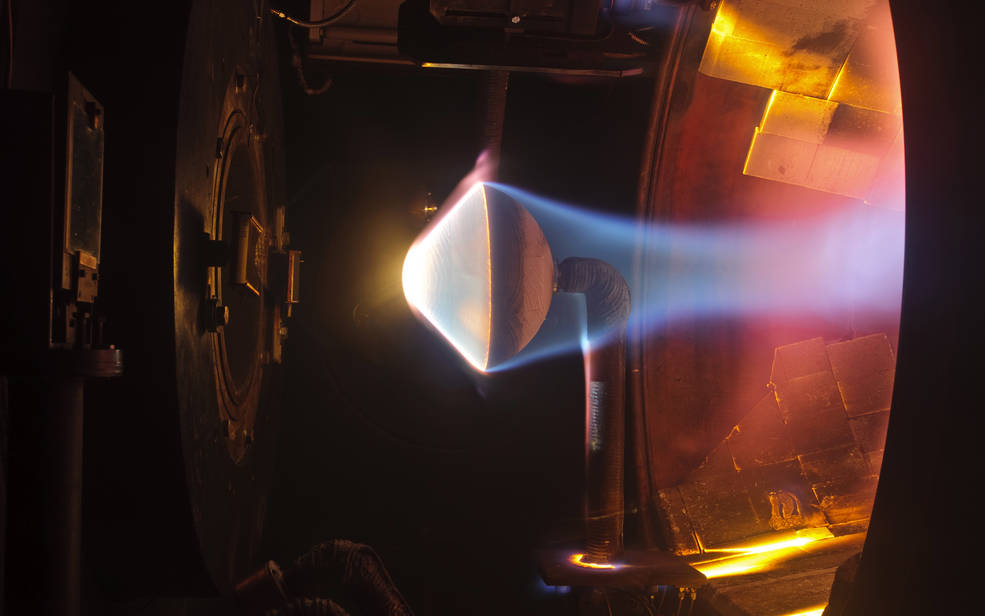
Test article glowing in the plasma stream of a NASA arc jet facility
NASA Ames · arc jet in operation
NASA Ames · plasma wind tunnel

Arc Jet Complex: Class C, NPR 7150.2D delivered

A full data acquisition system upgrade for NASA's arc jet complex: high-enthalpy flow over instrumented articles, synchronous high-channel-count acquisition, and complete NPR 7150.2D Class C compliance. Articles are consumed in the plasma stream: there is no retest, so the run's data has to be right the first time. Wind-tunnel-class work, delivered and in service.

Astra rocket lifting off from Cape Canaveral, Astra logo visible on the strongback
Astra · Cape Canaveral
Astra · propulsion

Commercial rocket engine hot-fire campaigns

At Astra, STAR-GOAT serves as a data acquisition and control platform supporting routine test operations including facility and engine checkouts, and hot fire testing: giving the test team a reliable, configurable interface for high-speed data acquisition and control.

Named deployment · Read the full Astra story
Anonymized · hypersonic

A U.S. hypersonic test range

Extreme-rate acquisition and real-time control on ground test infrastructure where security requirements narrow the vendor field and a forfeited window takes months to rebook.

Anonymized · customer and facility cannot be identified
Anonymized · automotive

A major automotive test organization

The same core platform, exercised through its XNET/CAN acquisition path in automotive test cells. Proof the architecture generalizes beyond aerospace without touching the core.

Anonymized · customer and facility cannot be identified
“JKI’s STAR-GOAT software has been an ideal choice for our engine test stand. Its reliability, scalability, and intuitive interface enable us to operate the entire stand with confidence while making instrumentation and control changes quickly and efficiently, without losing valuable time troubleshooting control software.”
Colin McDonald · Manager of Test Engineering, Astra

Before you commit to anything: talk to the JKI engineers who built these systems, not a salesperson. Get the full performance datasheet, every platform benchmarked under load, including where we are weakest. Watch a live system run a sequence and trip an abort condition. Read the product documentation. And if a conversation with the NASA Ames team would help, we can ask.

Packages

Three starting points, scoped to what your program is doing.

Each tier is a starting configuration. Channel counts, rates, and client counts are set against your channel map during scoping.

Tier 01

Component & Subscale

Component rigs, subscale articles, and lab-bench test cells getting rigorous data without standing up a software development effort.

  • Up to 200 channels · 50 kHz
  • 100 Hz control · 1 controller + 3 clients
  • 1-day installation & training
Start with a readiness review
Tier 02 · Most programs

Active Test Campaigns

Active campaigns where a lost test day has a real price and configurations change weekly: development engines, tunnel entries, test cells running back to back.

  • Up to 500 channels · 100 kHz
  • 500 Hz control · 1 controller + 4 clients
  • 3-day installation & training
Start with a readiness review
Tier 03

Full-Scale & Qualification

The whole stand on one system: hundreds of instruments at full rate, deterministic control at kilohertz rates, and the campaigns where a single run carries a flight article.

  • 2000+ channels · 200 kHz+
  • 1 kHz RT control · 1 controller + 5 clients
  • 1-week installation · priority support
Start with a readiness review

As needed

Deployment

Hands-on startup support

  • Phase 1: stand and instrumentation checkout. I/O terminated, sensors calibrated, signals verified end to end
  • Phase 2: most programs reach first run within 30 days. Installed, P&ID configured, abort conditions reviewed, crew trained
Compliance

NASA Compliance Package

  • NPR 7150.2 Class C/D artifacts and process, grounded in the Ames delivery
  • With STAR-GOAT, or standalone for existing LabVIEW systems
  • Compliance Package details
Ongoing

Support & maintenance

  • Support hour blocks
  • Annual maintenance: updates and upgrades
  • Scoped to how much your team wants to own
Licensing

Per system or site-wide

  • Per system, where each stand or cell carries its own budget
  • Site-wide, where a facility standardizes: one operator pipeline, one data format, one maintenance contract
  • Pre-agreed expansion path either way
“JKI’s STAR-GOAT is intuitive and trusted across our test operations. It performs reliably across a wide range of applications, and their team has been responsive whenever we’ve needed support.”
Micah Williams · Head of Test, Astra

Pricing follows your readiness review. Every quote is scoped against your channel map, control requirements, compliance obligations, and what a lost test day actually costs your program. All packages are available with perpetual licensing.

Next step

Book a Test Stand Readiness Review.

A free, 45-minute structured working session with a JKI test engineer. You leave with your own build-vs-buy numbers and a clear view of your compliance exposure, whether or not you buy anything.

What we cover in 45 min
  1. Your channel map and acquisition rates
  2. How your data gets recorded and reduced (full-rate logging, steady-state points, or both)
  3. Control requirements and abort philosophy
  4. Compliance obligations (NPR 7150.2 and others)
  5. Your timeline and build-vs-buy numbers, including where STAR-GOAT is not the right answer